

What is the reason for the low viscosity phenomenon of solder paste on circuit boards
The phenomenon of low viscosity of solder paste refers to a situation where the parts cannot be adhered by solder paste during or after the molding process. Possible reasons for low adhesion include: lack of solder paste coating, lack of solder paste adhesion, inappropriate metal content, rough particle size, rapid movement of the circuit board during assembly, inadequate support of the circuit board during assembly, humidity effects, and so on.
If the amount of solder paste printed on the circuit board is insufficient, it can be understood that the solder paste cannot adhere to the parts printed on the circuit board. Flux is the decisive factor in the adhesion of solder paste, and low viscosity flux will naturally produce low viscosity solder paste. Because tin powder itself cannot provide viscosity, excessive powder particles are detrimental to the persistence of viscosity. However, the relationship between metal content and viscosity is quite complex. As the metal content is added, the viscosity gradually decreases. At the beginning, the viscosity rapidly decreases, and then the rate of decrease gradually slows down. The downward trend is likely related to the thickness of the test sample.
Generally speaking, the lower the content of powder particles, the more solder paste will be squeezed during the viscosity testing period, and the gap between the testing probe and the substrate will be smaller. A smaller gap is conducive to maintaining the integrity of the printing and avoiding leakage. When the metal content exceeds about 40%, according to the testing experience of a certain solder paste, the viscosity will slightly decrease with the addition of metal content.
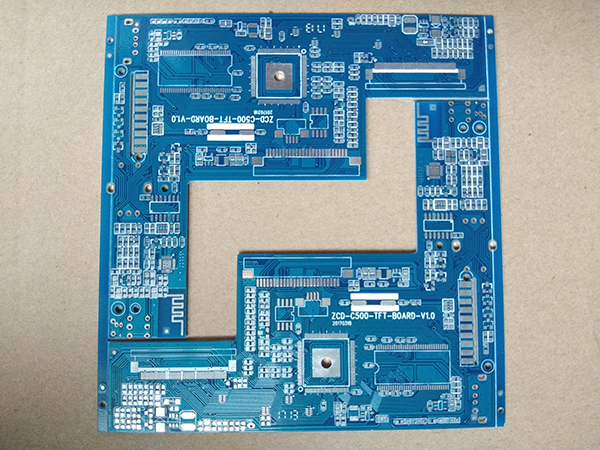
The addition of viscosity should be due to the cohesive force enhancement effect caused by the filler. When the metal content exceeds a certain critical value, the viscosity will continue to decrease, which is caused by insufficient coating and adhesion of the solder powder by the flux. This insufficient adhesion will gradually increase. The viscosity is proportional to the adhesion and cohesion of the solder paste, and the adhesion is distributed by a single element of the flux. Cohesion will increase with the decrease of powder particle size, which is caused by the addition of solder paste viscosity, resulting in the addition of viscosity.
The firmness of the workpiece is not only determined by the viscosity of the solder paste, but also by the complex problems encountered by the workpiece equipment. For a packaging device, the use of a certain solder paste is good, but unfortunately, problems occur after changing the device. One of the important factors affecting the persistence of parts is the movement of the circuit board. If the circuit board moves quickly during the assembly stage, the inertia of the parts may exceed the adhesive force of the solder paste, which can cause the parts to tilt and slide.
Another influencing factor is the stability of the circuit board itself during the packaging process. If the circuit board is not properly supported and fixed, it will experience significant shaking when bumped by the placement arm, resulting in the problem of dropping or throwing components. Appropriate process planning should include reasonable supporting mechanisms and sturdy fixtures for clamping circuit boards.
Viscosity is an important characteristic function of soldering flux. Some soldering fluxes quickly absorb moisture, and humidity will inevitably affect the viscosity of solder paste. High humidity may cause external hardening, thinning of solder paste, and a decrease in viscosity, all of which should be prevented.
When solder paste is first exposed to air, it will have appropriate or high viscosity. But after the circuit board is printed, the viscosity quickly decreases with time, which makes the scale of circuit board processing very narrow.
Possible reasons for the short stickiness time include: high metal content, high solvent volatility, coarse particle size, hardening of the printed solder paste surface, high air activity in the operating environment, improper humidity, high ambient temperature, and use of thin steel plates.
The issue of metal content has been repeatedly commented on, and the time to maintain viscosity will shorten with the increase of metal content. It is obvious that if the flux content is added, the adhesive time of the solder paste will inevitably increase, which can also be explained by the influence of solvent content addition. This way, we can understand that many circuit board manufacturers or literature have reasons for insisting that the metal content of solder paste should not exceed about 90%.
The addition of surface area of the powder particles will assist in the preservation of the solvent for a longer period of time, due to the enhanced adsorption effect between the powder particles and the solvent on the surface. But if the powder particles are small, it may cause the chemical reaction between the flux and the powder particles to increase and accelerate, which may also lead to the occurrence of surface peeling and a decrease in viscosity.
Article sourced from Jiangmen single and double-sided circuit boardhttp://www.yonghongpcb.com
-
09-09
Schematic diagram of Jiangmen single and double-sided circuit board
1. There are now various specialized PCB drawing software, such as Protel, which can draw multi-layer (including double-sided) circuit board diagrams. The layers are aligned in orientation and have vi
-
09-09
Schematic diagram of Jiangmen single and double-sided circuit board
1. There are now various specialized PCB drawing software, such as Protel, which can draw multi-layer (including double-sided) circuit board diagrams. The layers are aligned in orientation and have vi
-
09-09
Schematic diagram of Jiangmen single and double-sided circuit board
1. There are now various specialized PCB drawing software, such as Protel, which can draw multi-layer (including double-sided) circuit board diagrams. The layers are aligned in orientation and have vi
-
04-27
What is the structure of blind buried hole circuit board?
blind and buried viascircuit boardIt has the ability to freely bend, fold, and roll, and can move and stretch freely in three-dimensional space; Good heat dissipation performance and high precision; T